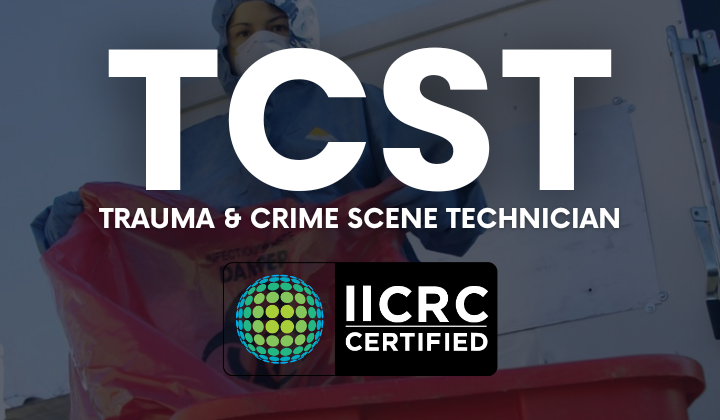
Trauma & Crime Scene Technician

Dates: September 21 – 22, 2026
Time: 10:00am to 6:00pm EST
Location: Virtual Course Delivered via Live Stream
$595.00 + tax
Course length: 2 days, 14 IICRC CEC credits available
This 2-day IICRC Trauma and Crime Scene Technician (TCST) course is one the most impactful, meaningful classes offered in a certification category. Unfortunate situations happen, and it’s important as professionals that we are prepared for these losses. Crime and Trauma Scene Technicians have a very difficult job. It’s not just about “cleaning”; it’s about ensuring the site is safe and prepared to reoccupy. It’s about decontaminating surfaces to ensure there are no additional risks or hazards that may continue to impact or harm people. It’s about people.
Save Time
Learn Faster
Save Money
Friendly Support
This (TCST) certified IICRC Trauma and Crime Scene Technician course is designed to train you mentally and physically how to deal with a trauma or crime scene in a professional, caring manner in accordance with the outlined standards and guidelines available today.
Attendees who complete the course will acquire the necessary skills and knowledge required to properly evaluate, clean and decontaminate a site following a human trauma or crime scene event. Learn how to manage these unique situations encountered when performing trauma and crime scene services based on the current industry standard. Learn how to apply and integrate the ANSI/IICRC S540 Standard into your practices and procedures. Learn how to inspect and investigate potentially infectious materials and establish hazard assessments, work plans, and procedures for cleaning and safe transportation of contaminated material.
Additional Learning includes:
- Communication and how to demonstrate compassion
- 8 general principles to manage blood and OPIM
- Inspection and job site completion, conduct and checklists
- Managing cross contamination
- Performing a hazard assessment
- Medical vs regulated waste
- Work practice controls
- Personal protective equipment
- Managing psychological hazards
- Sampling technology
- Managing contents
- Odour management
- Structural decontamination
- Orientation to regulations
Attendees Will Learn
- Decontamination techniques
- Mental preparedness to handle sensitive situations
- Managing gross filth
- Site preparation
- Use of Personal Protective Equipment
- How to recognize hazards
- Decontamination & clean up techniques
- Disposal techniques and requirements
- Industry Standards and how to apply them
- Surface staining removal
- Phone protocols
- Step by Step process to creating effective procedures
- Products to use and ones to avoid
- Setting customer expectations
Missed surface decontamination and odours are the #1 reasons for call backs and lost profits!
This (TCST) certified IICRC Trauma and Crime Scene Technician course promises to engage not only the new technician but also the seasoned veteran including those in project management, insurance adjusting professionals, supervisory teams and ownership in current up to date removal techniques that are proven to:
- Remove and manage surface staining
- Odours at their source
- How to improve decontamination and cleaning efficiencies to remove residues causing contamination
Learn how to increase profits through labour efficiencies on crime and trauma scene projects as well as matching the procedure to the source with this two-day TCST training course.
Not only does this course address the concerns of safety and application of standards but it also addresses contamination and scene visualization that plagues most contractors, but also prepares the insurance restoration contractor for handling problems such as customer interaction, signing authorizations, managing documentation, contents salvage determination and decontamination, as well as death and trauma claim odours.
Looking for a class? If you want your learning experience to support a profitable and productive opportunity delivered in a fun, comprehensive, engaging manner for you or your team, register today and join us at the Center for Disaster Recovery.
If boring, dry and monotone learning is your style we would be happy to refer you elsewhere!
While this course is very detailed and comprehensive, it is also graphic (to demonstrate techniques), which may not be for everyone.